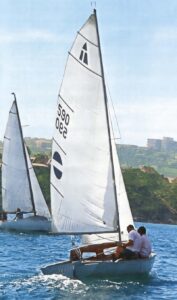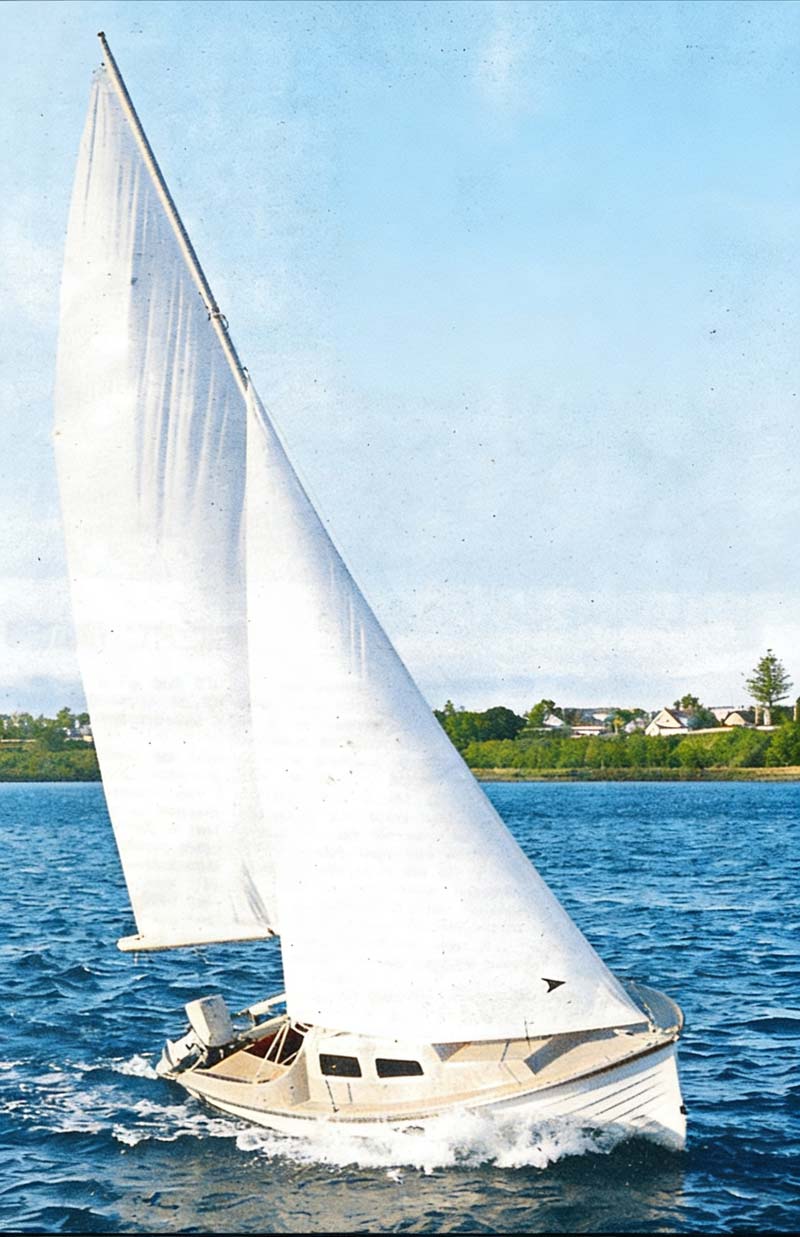
Introduced at the 1969 National Boat Show, the Explorer attracted attention with its traditional clinker appearance. Although it looked like a timber-built yacht, closer examination revealed that the clinker planking was moulded in fibreglass, combining classic styling with modern construction.
The 16 ft 6 in Explorer was designed, built and tested by J. Botterill & Sons. Despite its compact size, it offered several appealing features. Drawing only six inches of water with the centreplate raised, the yacht could operate in very shallow areas. Its simple mast and standing rigging arrangement contributed to a practical, solid, no-nonsense boat appearance.
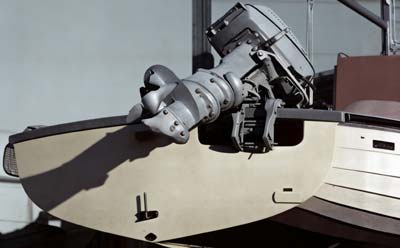
Powered by a 6 hp outboard mounted in a self-draining transom well, the Explorer comfortably achieved around five knots during trials on Sandringham Harbour. Unlike some centreboard yachts that can become difficult to control with the plate raised, the Explorer remained manageable when manoeuvring among moored boats and marina berths.
The boat was engineered with simplicity and strength in mind. Its construction utilised a one-piece hull and a separate moulding that incorporated the deck, cabin and cockpit floor into a unified structure. This design reduced the number of joints and seams, creating a clean appearance while improving rigidity.
Safety considerations were evident throughout the design. The non-slip foredeck provided secure footing, while the forehatch was positioned so crew could handle anchoring and sail work while remaining largely protected below deck. The hatch was secured from inside the cabin.
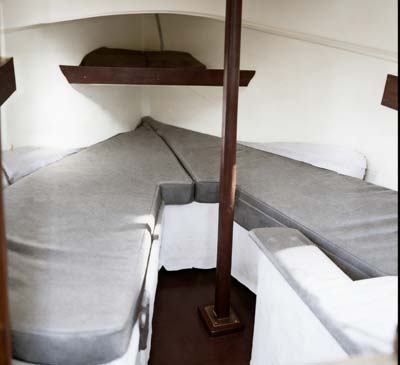
Accommodation consisted of two berths located either side of the timber-capped centreplate case. The 147 lb (67 kg) cast-iron aerofoil centreplate could be raised or lowered to adjust draft and trim while also contributing to the yacht’s stability.
Structural reinforcement was incorporated where required, with loads distributed through a moulded cruciform girder system integrated into the cabin roof. The mast arrangement eliminated the need for a compression post, while the roof itself used a strong fibreglass and Dacyell sandwich construction. Hull and deck were securely joined using a bolted timber gunwale strip that also helped prevent water leakage.
The cabin provided adequate sitting headroom above the pair of 6 ft 3 in bunks. Foam cushions served both seating and sleeping purposes, and production models were intended to include a Nautolex-lined cabin sole. Provision was made for owner-customised interior arrangements, including space for lockers or a marine toilet.
Although simply finished, the cabin’s timber trim around the bunks, hatchway and centreplate case created a warmer atmosphere. Storage arrangements were still being finalised at the time of review.
Inspection of the interior revealed a thoughtfully engineered structure. Chainplates were moulded directly into the hull, and window fittings were mounted to substantial timber backing blocks. The aluminium-framed Perspex windows appeared robust enough to withstand heavy seas, while the forward hatch featured an effective seal and reliable fastening mechanism.
Large storage compartments occupied the quarter-berth areas, extending aft beneath the cockpit and providing room for bedding, sails and other bulky equipment. Throughout the cockpit, practical design was emphasised, with non-skid surfaces applied wherever footing might be uncertain.
The cockpit layout was notably uncluttered. Controls consisted mainly of a centrally mounted mainsheet cam cleat and adjustable jib sheet cleats. Additional storage beneath the seats and aft deck accommodated fuel tanks, mooring gear, fishing equipment and general supplies.
Running rigging was straightforward and easy to operate. Stainless-steel wire halyards with polypropylene tails, synthetic rope sheets, roller-reefing mainsail gear and a jib-furling system made sail handling simple. Future production boats were expected to feature an improved jib-reefing arrangement.
A significant safety feature was the underfloor and underbunk buoyancy system. The interior structure incorporated a grid of watertight flotation cells beneath fibreglass and foam sandwich flooring.
Under sail, the Explorer demonstrated impressive handling characteristics. In moderate conditions the yacht proved responsive and remarkably agile, turning through tacks more like a racing dinghy than a small cruiser. With the centreplate lowered, stability was excellent and helm balance was exceptionally light, often requiring little more than fingertip pressure to maintain course.
Even when deliberately heeled by moving all crew weight to the leeward side, the yacht remained predictable and controllable. Additional testing in stronger weather confirmed its easy handling, with the reefing systems allowing sail area to be reduced quickly when conditions demanded.
Overall, the Explorer combined the stability and comfort expected of a small cruiser with performance that exceeded appearances. Its forgiving nature made it suitable for newcomers to sailing, while more experienced sailors could enhance its capabilities with additional equipment (Seacraft 1969, pp. 50-51).
Specifications
MODEL — Explorer 16 ft trailer sailer
DESIGNERS AND BUILDERS — J. Botterill & Sons, Avantage Rd, Highett, Victoria.
LENGTH — 16 ft 6 in.
BEAM — 6 ft 6 in.
DRAFT — plate up 6 in., plate down 3 ft.
BALLAST — 147 lb aerofoil section cast iron centreplate.
CABIN HEADROOM — comfortable sitting.
ACCOMMODATION — Two berths in lock up cabin.
COCKPIT SIZE — 6 ft 6 in. long.
SPARS — aluminium.
RIGGING — stainless steel and synthetic rope.
SAILS — main 90 sq ft; jib 50 sq ft; total 147 sq ft.
PRICE — boat $2300 (tax paid) inc. all equipment; trailer $200 (approx.).
Source: ’20th Century Explorer’, Seacraft, October 1969, pp. 50-51.
Historical photograph reproduced for identification and historical research purposes. Copyright remains with the original rights holder.
Quick tip: Keep in mind that trailer sailers can vary quite a bit, even within the same class. Take the RL28, for example: they might not all have outboard wells as designed. Some originally may have had inboard engines, and when those were removed, the owners swapped them for a standard outboard mounted on the stern.