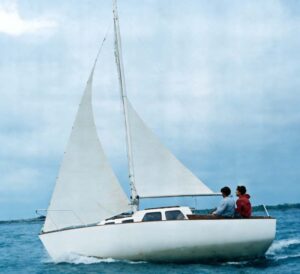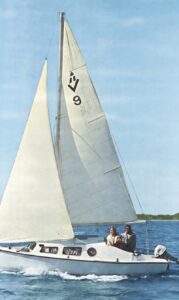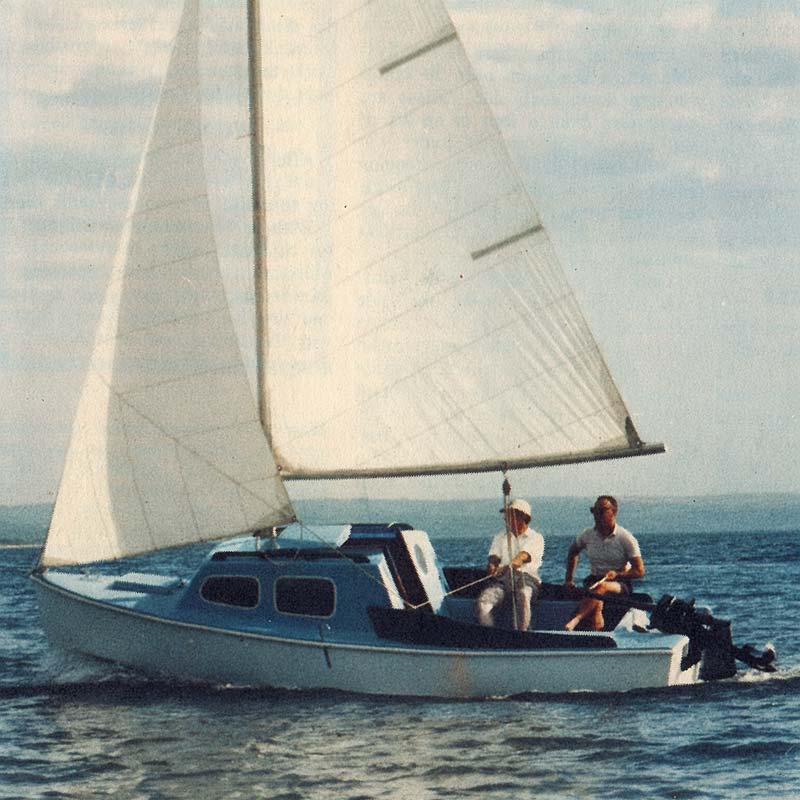
The boating industry had experienced a significant shift away from amateur or custom-built boats as stock model yachts of various sizes surged in popularity. South Australia had warmly embraced trailable cabin yachts and local boatbuilders were actively constructing and selling them interstate. Tony Pays and the team at Seacraft tested the 18-foot fibreglass Sou’wester built by W. G. Porter & Sons of Birkenhead, South Australia, with Victorian distribution handled by Dandenong’s Dandy Power Equipment.
The Sou’wester features a hull shape combining full and convex bow sections transitioning smoothly into flattish bottom surfaces and a rounded stern, indicating it was intended for easy handling and stability rather than pure speed. Although it bears curves that resemble a carvel fishing boat, it is constructed from reinforced plastic rather than plywood. Rigged and ready to sail in just ten minutes, the boat features a mast hinge with a simple and effective design, an aluminium stay with two holes, and a light pair of shrouds and a forestay made of stainless steel. Powered by a 10 hp Mercury outboard motor, the boat achieved an estimated eight knots in calm waters, handled well under sail, and featured a 120 sq ft mainsail that can be easily reefed using a built-in roller reefing mechanism.
On the water, the jib sheeting required some improvement, as the fairleads on the cockpit coaming made it difficult to tension the jib on hard beats, often requiring fishermen-type cleats to secure the line properly. Raising and lowering the galvanised steel centreplate and aluminium rudder blade was manageable, and the boat maintained stable performance when heeled. Inside the cabin, there was comfortable seating with ample headroom over the bunks, continuous storage shelves, a folding table, optional space for a toilet, and drainage provisions in the floor. The cockpit accommodates seating for at least six people, and molded non-skid surfaces enhance safety on deck alongside a foredeck hatch. Overall, the testers found the Sou’wester to be a solidly built, handsome craft offering great accommodation and performance for a growing family fleet (Pays, 1969: 30-33).
Specifications
Model: Sou’wester Fibreglass Trailer Sailer
Manufacturer: W. G. Porter & Son Pty Ltd, Birkenhead, SA
LOA (Length Overall): 18 ft 6 in
LWL (Length Waterline): 17 ft 4 in
Beam (max): 7 ft 4 in
Beam (at transom): 5 ft 11 in
Draft (plate up): 8 in
Draft (plate down): 4 ft 9 in
Freeboard: 1 ft 6 in
Cockpit length: 6 ft 4 in
Cabin headroom: 3 ft 2 in
Accommodation: 4 berths
Mast height: 24 ft
Sail area: Main 120 sq ft; Jib 70 sq ft
Standard rigging: Stainless steel
Running rigging: Galv. wire and synthetic rope
Auxiliary power: Outboard motor, about 10 hp
Price: $2495 ready to sail (1969)
Source: Pays, Tony (1969) ‘Seacraft Test-Sails: Sou’wester Solid Trailer Sailer’ Seacraft, April, pp. 30-33.
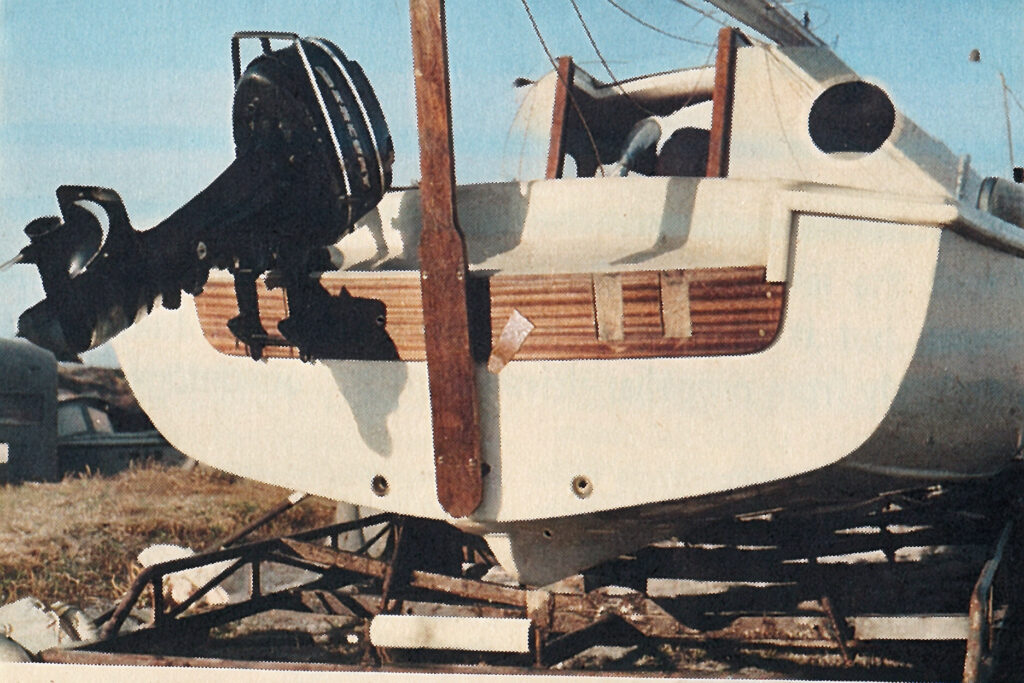
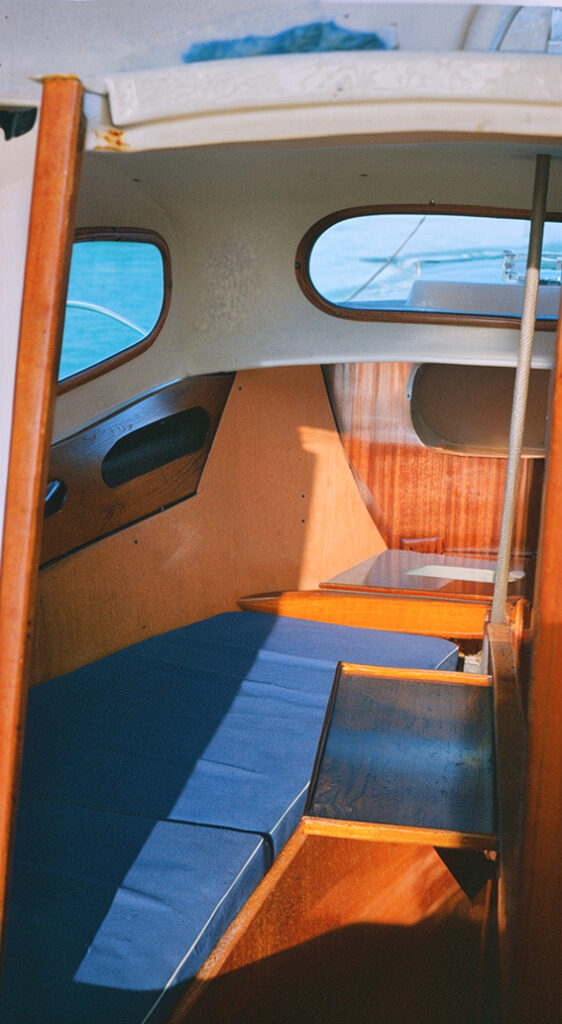
Historical photograph reproduced for identification and historical research purposes. Copyright remains with the original rights holder.
Quick tip: Keep in mind that trailer sailers can vary quite a bit, even within the same class. Take the RL28, for example: they might not all have outboard wells as designed. Some originally may have had inboard engines, and when those were removed, the owners swapped them for a standard outboard mounted on the stern.