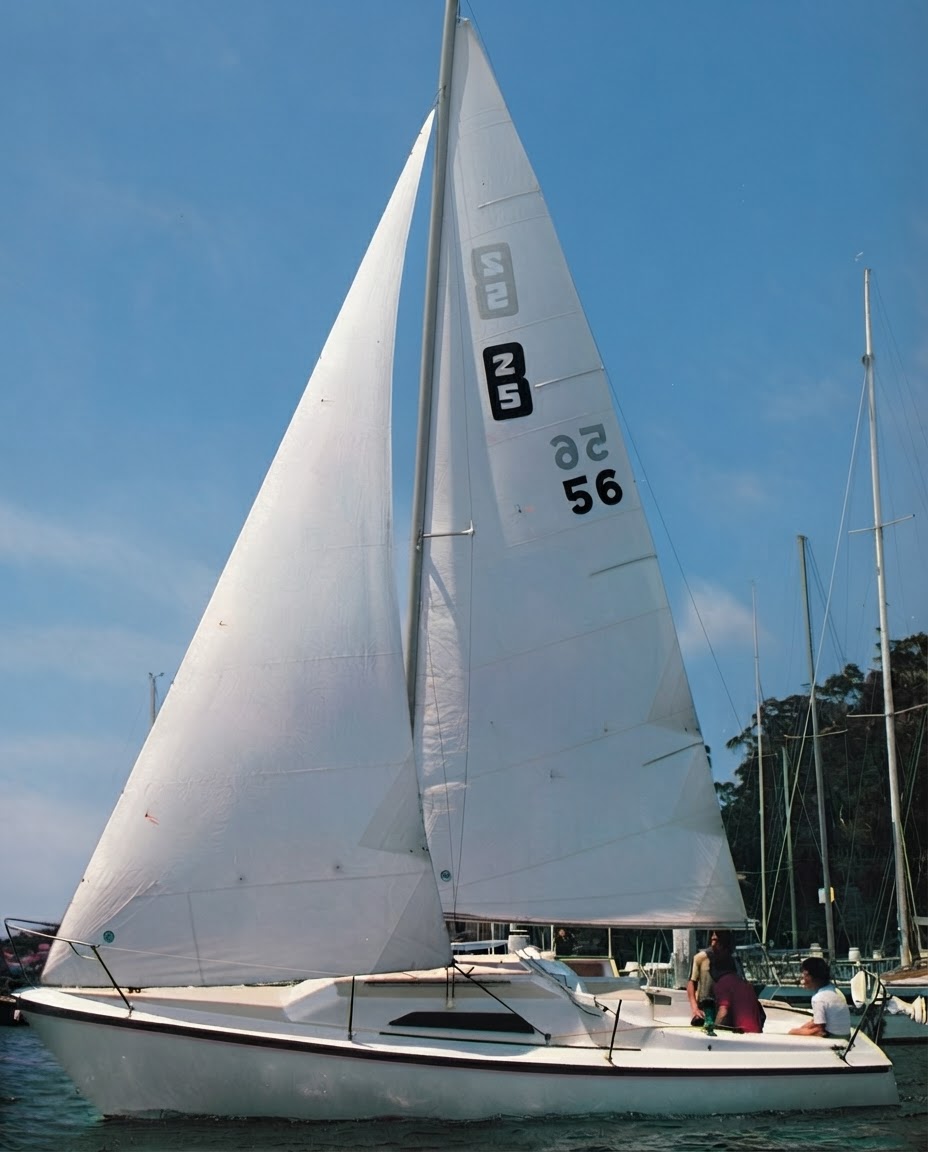
The Binks 25 is a maxi trailer yacht designed and built by South Australian designer David Binks, who transitioned from building high-end racing dinghies to offshore cruising yachts. Rather than focusing on maximum interior headroom or large sleeping accommodations at the expense of performance, the design emphasizes safe offshore handling and speed. Unlike conventional trailer sailers that utilize lightweight drop centreboards, the Binks 25 features a weighted swing keel ending in a teardrop bulb. This keel remains locked down while sailing, giving the vessel the self-righting characteristics, stability, and handling of a traditional offshore keelboat while maintaining ease of trailering.
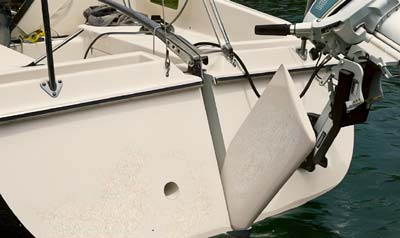
The hull features low freeboard, full sections with slight tumblehome in the topsides, and a wide, flat stern designed to rise over steep chop rather than plow into it. The low deck profile utilizes sculpted wedge-side contours rather than a boxy cabin superstructure. Below deck, headroom is restricted to comfortable sitting height, which keeps the displacement light at 1.3 tonnes for easy towing and launching. The rig utilizes a manageable 28-foot mast, a full-hoist Number Two headsail, and an oversized Number One genoa for light air conditions. To streamline the profile and simplify trailering, the spade rudder is housed in a transom slot and retracts directly upward into a dedicated box rather than hanging off the stern on pintles.
Under sail, the Binks 25 exhibits strong initial stiffness, tracking predictably upwind without heavy weather helm. Raising or lower the keel slightly alters the vessel’s balance to fine-tune steering pressure during off-wind legs. The hull performs reliably in heavy seas, handling wash and choppy ocean swells smoothly without taking water over the bow. The deck layout incorporates dual sheet winches, coachroof-mounted halyard winches, moulded life-buoy recesses near the helm, and heavy-duty deck hardware, though optional dodgers can restrict visibility from the helm when raised.
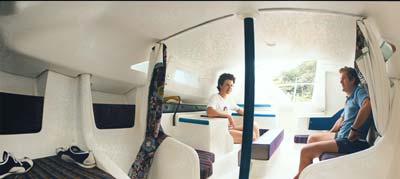
The interior layout prioritizes functional space over standing headroom, omitting pop-top mechanisms in favour of structural strength. The cabin is constructed as a single-piece interior moulding with smooth, rounded contours. Accommodations include five berths, a forward Vee-berth split by curtains, a galley equipped with a two-burner stove, two iceboxes, a sink with a plate rack, and a dedicated navigator’s chart table and seat. A fold-down teak table covers the centreboard trunk to accommodate four diners. Built-in foam buoyancy inside the double-skin construction ensures the boat remains floating even if the outer hull is breached (Hill 1979, pp. 56ff).
SPECIFICATIONS
-
Model: Binks 25
-
Designer: David Binks
-
Builder: Binks Yachts, Somerton Park, South Australia
-
Length Overall (LOA): 7.82 m (25 ft 8 in)
-
Length Waterline (LWL): 7.01 m (23 ft)
-
Beam: 2.49 m (8 ft 2 in)
-
Draft (Keel Up): 0.25 m (10 in)
-
Draft (Keel Down): 1.42 m (4 ft 8 in)
-
Mast Height: 8.53 m (28 ft)
-
Working Sail Area (Main): 13 sq m (140 sq ft)
-
Working Sail Area (Headsail): 16.9 sq m (182 sq ft)
-
Ballast Weight: 272.2 kg (600 lb)
-
Displacement: 1,168.4 kg (2,600 lb)
-
Water Capacity: 70 Liters (15 Gallons)
-
Basic Sail-Away Price (Dec 1978): $11,288 (plus motor and trailer)
-
Basic Sail-Away Price with Tandem Trailer: $13,000
-
As Tested Price (Dec 1978): ~$16,000 (fully fitted with lifelines, pushpit, pulpit, deck gear, engine, and trailer)
Source: Hill, James (1979) ‘Binks 25: Safety First’ Seacraft, April, pp. 56ff.
Historical photograph reproduced for identification and historical research purposes. Copyright remains with the original rights holder.
Quick tip: Keep in mind that trailer sailers can vary quite a bit, even within the same class. Take the RL28, for example: they might not all have outboard wells as designed. Some originally may have had inboard engines, and when those were removed, the owners swapped them for a standard outboard mounted on the stern.