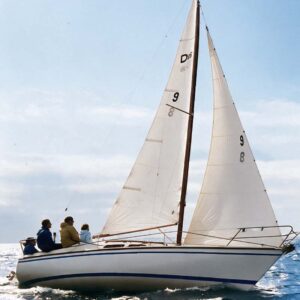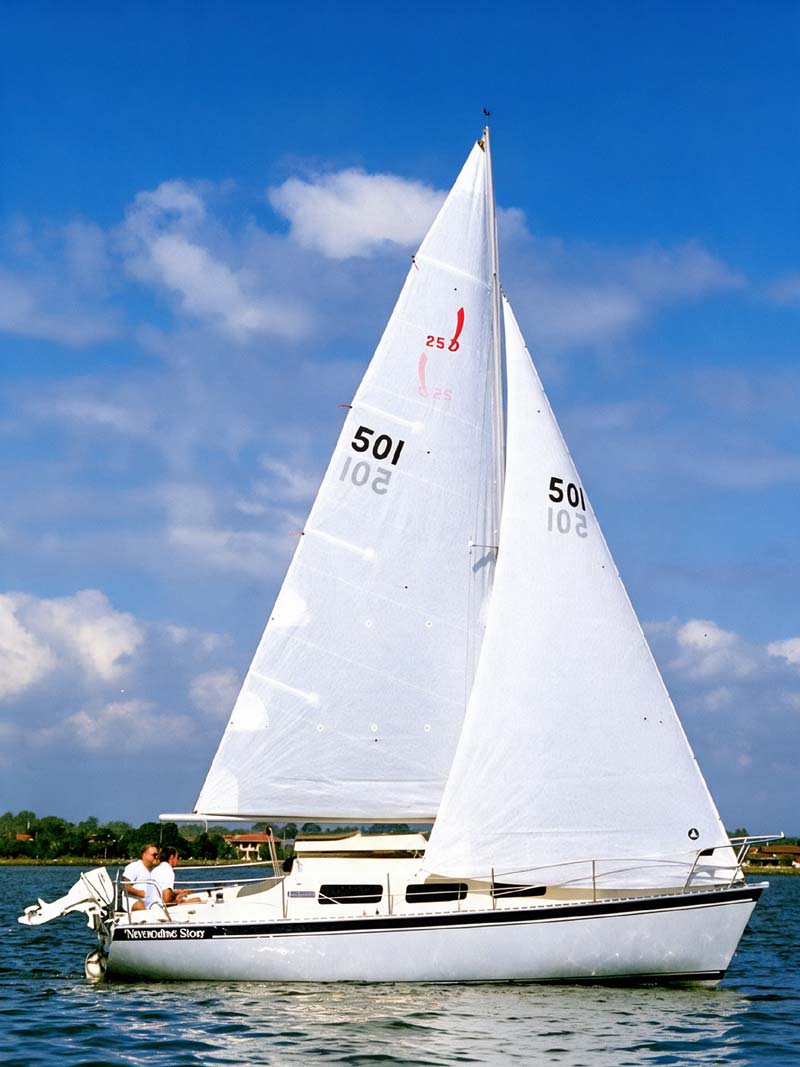
The trailer sailer market was once crowded with dozens of models, many of which prioritized interior space over sailing performance, resulting in sluggish, heavy vessels. As the market consolidated under economic pressure, high-performance designs dominated, yet a steady demand remained for practical family boats. The Sabre 25, crafted by John Hay in Brisbane, bridges this gap by combining roomy living spaces with design features that ensure respectable speeds and agile handling. Building on the success of the popular Sabre 22, the 25-foot model retains a timeless appearance while incorporating lightened cored hull construction and an optimized sail area.
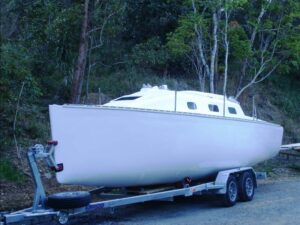
To protect the lightweight hull core during transport and launching, the boat features a long, shallow stub keel that absorbs impact from trailering and groundings. Despite its generous proportions, the displacement remains manageable at around 1,250 kg, making it straightforward to tow, while the total trailering weight on its dual-axle tilt trailer sits at 1,870 kg. The hull shape features a sharp forefoot, a narrow stern, and slightly rounded sections that help maintain momentum. On the water, a modest pop-top offers added standing headroom inside, while the open cockpit layout is maximized by a vertical, cutaway transom with step-through access and a hull-extension swim step.
Inside, the interior layout is thoughtfully planned for family trips and weekend stays. A forward galley is mounted against the main bulkhead, and the forepeak accommodates a V-berth with generous shelf storage and an overhead hatch. The full-width bathroom layout separates the main cabin from the bow using double doors, housing a marine head to port and an adaptable area to starboard that can hold a vanity, icebox, or hanging locker. A unique solar shower setup utilizes a five-gallon bag hoisted on a halyard, delivering water directly into the cabin area through a deck fitting connected to a 150-liter bow water tank. The main saloon features full-length settee seating, a drop-leaf table mounted over the centreboard casing, and a simple 25-turn manual winch mechanism to raise and lower the 460 kg ballasted centreboard.
Rigging and handling are designed for convenience and ease of operation by a small crew. The lightened, tapered aluminium mast can be raised by a single person using a stepped pin system and a roller-equipped towing bracket. Under sail, the main and jib provide sufficient sail area to keep the vessel moving smoothly even in very light winds, demonstrating great efficiency and stability without unexpected habits. The cockpit is arranged for control, featuring a mainsheet traveller across the bridge deck, an outboard motor bracket to starboard, and multiple storage lockers for equipment, fuel, and gas. Overall, the boat provides an attractive, comfortable, and well-balanced option for recreational sailors (Tranter, Barry).
Specifications:
– Length Overall (LOA): 7.70 m
– Length Waterline (LWL): 7.00 m
– Beam Overall: 2.45 m (8 ft)
– Beam Waterline: 2.11 m
– Draft: 0.44 m to 1.70 m
– Displacement: 1,250 kg
– Ballast Weight: 460 kg (lead core inside fibreglass centreboard)
– Total Weight on Trailer: 1,870 kg
– Height on Trailer: 2.80 m
– Mainsail Area: 17.8 sq m
– Jib Area: 11.5 sq m
– Spinnaker Area: 42.0 sq m
– Hull Core Material: Termanto foam
– Sailaway Boat Price: $35,490 AUD (kits available from $16,800 AUD) (Time of Test)
– Trailer Price: $4,450 AUD (Dual axle Tinka tilt trailer with vacuum brakes)
– Builder: Sabre Yachts Australia Pty Ltd., Clontarf, Qld
Source: John Crawford Marine. “Sabre 25” Trailer Sailer Library. Accessed November 2, 2026.
https://www.johncrawfordmarine.com.au/advice/trailer-sailer/sabre-25
Photograph reproduced for identification and historical research purposes. Copyright remains with the original rights holder.
Quick tip: Keep in mind that trailer sailers can vary quite a bit, even within the same class. Take the RL28, for example: they might not all have outboard wells as designed. Some originally may have had inboard engines, and when those were removed, the owners swapped them for a standard outboard mounted on the stern.