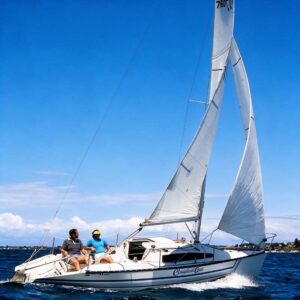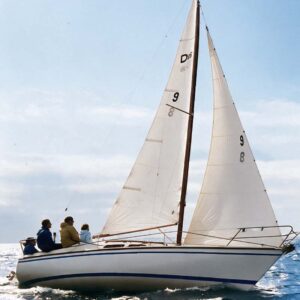
The Ross 780, designed by Murray Ross, stands out as a radical concept among New Zealand trailer sailers. Featuring a waterline length nearly 0.7 metres shorter than its overall length, it sports a near-plumb bow, elevated topsides, and a relatively narrow beam, giving the vessel a distinctive appearance. Its layout incorporates a vast, flat-bottomed cockpit terminating in a nearly vertical transom with an outboard rudder, offering ample space for a full racing crew alongside sophisticated rigging control systems. Australian agent Jim Scott imported the original prototype plug from New Zealand, and its impressive performances in Sydney trailer yacht racing generated significant interest and order inquiries, despite initial manufacturing delays.
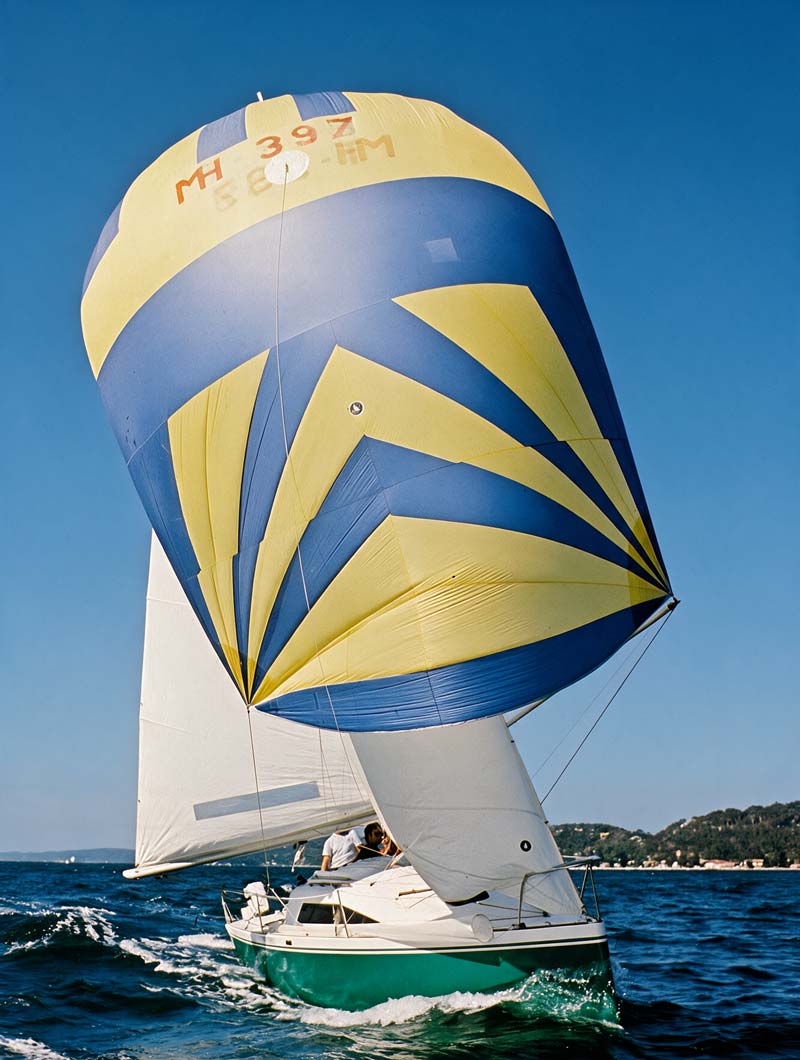
Notable technical features include a check stay system positioned below the main boom gooseneck, alongside a spinnaker launching and retrieval tube permanently mounted on the starboard foredeck. The adjustable check stays counter the forward pull generated by the boom vang, allowing the use of a lighter mast section than would otherwise be required. Additionally, a forestay is fitted for heavy weather conditions, and the working sail setup utilizes a self-tacking jib on its own curved traveler. The spinnaker system operates similarly to those found on modern dinghies and skiffs, allowing control directly from the cockpit via a pole stowed alongside the boom and lines leading through a tube in the foredeck.
Under sail, the Ross 780 demands precise mainsail trimming due to its high sail-area-to-weight ratio. The vessel is notably tender, requiring power to be bled off the mainsail in heavy gusts to stay upright. However, under spinnaker, it planes readily and climbs out of the water quickly when properly trimmed. Upwind performance is equally strong, requiring constant mainsail adjustment. Downwind, raising the centreboard and deploying the spinnaker enables the boat to reach impressive planing speeds while maintaining control.
Below decks, the high cabin trunk design yields a surprisingly spacious interior for a boat of its class. Generous cabin windows provide plenty of light, highlighting an interior outfitted with cushioned berths, timber trim, a tape deck, a well-proportioned galley, and standard head accommodation. Reviewers noted that the boat sailed like an oversized dinghy or Flying Dutchman, light, responsive, and exceptionally fast, making it an exciting prospect for skilled crews, even if its radical sail area and light displacement incur handicap penalties under certain racing rules (Davidson, Antill and Lewis 1982, pp. 48-49).
Specifications:
– LOA: 25′ 7″
– LWL: 23′ 3″
– Beam: 8′ 1″
– Draft: 5′ 11″
– Displacement: 2490 lbs.
– Ballast (Lead): 1012 lbs. (506 lbs. Daggerboard / 506 lbs. Internal)
– Headroom: 5′ 7″
– Sail Area: 322 SF
– E: 12′ 9″
– P: 28′ 9″
– I: 25′ 9″
– J: 8′ 6″
Source: Davidson, Antill and Lewis (1982) ‘Ross 780’ Australian Boating, January, pp. 48-49.
Historical photograph reproduced for identification and historical research purposes. Copyright remains with the original rights holder.
Quick tip: Keep in mind that trailer sailers can vary quite a bit, even within the same class. Take the RL28, for example: they might not all have outboard wells as designed. Some originally may have had inboard engines, and when those were removed, the owners swapped them for a standard outboard mounted on the stern.