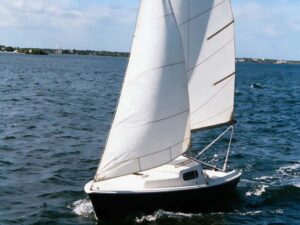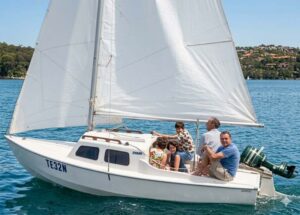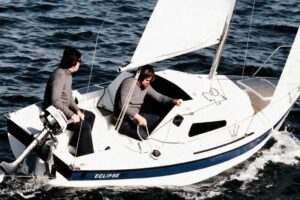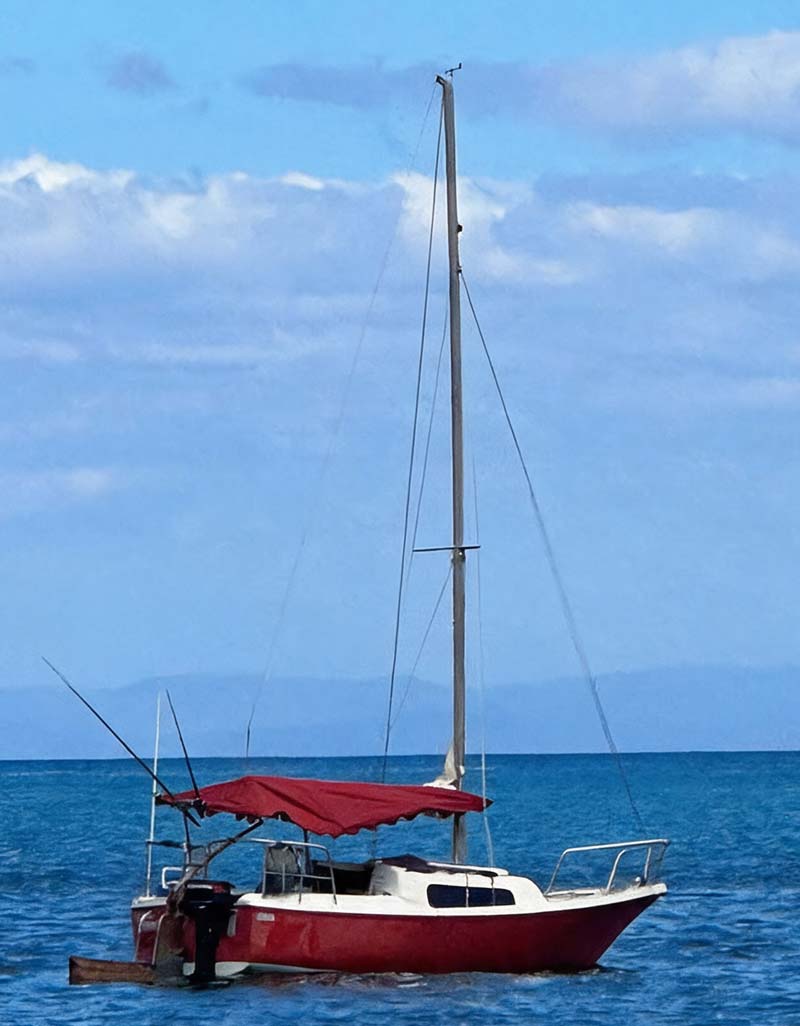
The Clipper 17 is a trailerable sailboat that was manufactured by Stoddart Bros. Marine Pty. Ltd., based in Lytton, Queensland. Designed with a functional and comfortable layout, the cabin features colour-coordinated finishes accented by rich teak trim. For practical onboard living, the interior is equipped with a galley counter top with dedicated spaces for a sink, stove recess, and a marine head (toilet recess). It also incorporates generous storage space throughout. The cabin receives ample natural lighting through two large aluminium-framed windows. Rather than utilizing a cramped dinette commonly found on vessels of this size, the interior offers a spacious four-person seating arrangement around a table, creating a welcoming area suitable for both dining and social conversation. Additionally, the keel winch handle can be dismounted and stored safely out of the way when the vessel is sailing or being transported on a trailer.
The standard Clipper 17 model encompasses a comprehensive set of features. Essential equipment provided with the vessel includes aluminium spars, a dedicated retraction winch for operating the keel, cabin hatches, as well as all necessary standing and running rigging, a rudder, and a tiller. Safety and functionality are enhanced by a self-bailing cockpit and moulded-in non-skid surfaces applied across the seats, cockpit sole, cabin top, and foredeck. The transom is also equipped with a dedicated motor mount.
Specifications:
* Manufacturer: Stoddart Bros. Marine Pty. Ltd.
* Length Overall (LOA): 16′ 9″
* Waterline Length (LWL): 14′ 0″
* Beam: 6′ 8″
* Draft: 4′ 0″ (Keel Down) / 10″ (Keel Up)
* Ballast: 380 lb.
* Displacement: 750 lb.
* Sail Area: 142 sq. ft.
Source: John Crawford Marine. “Clipper 17” Trailer Sailer Library. Accessed October 24, 2026. https://www.johncrawfordmarine.com.au/advice/trailer-sailer/clipper-17
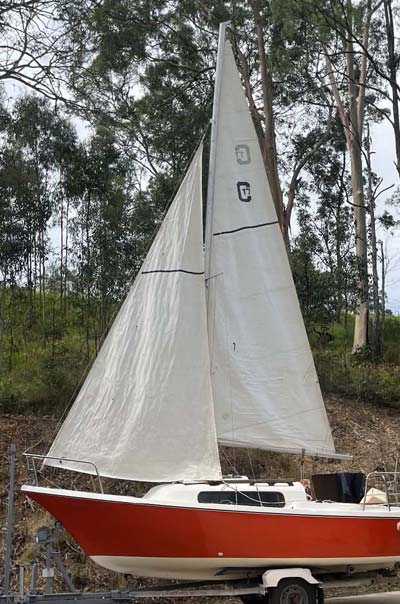
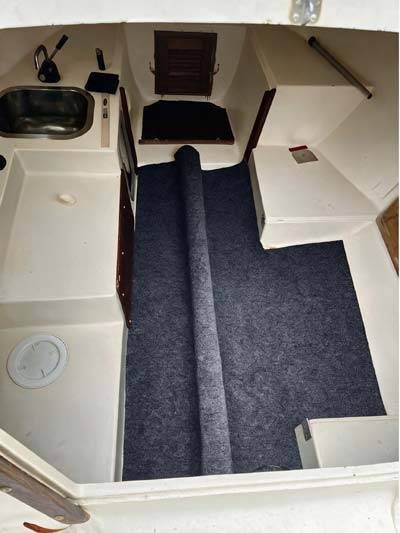
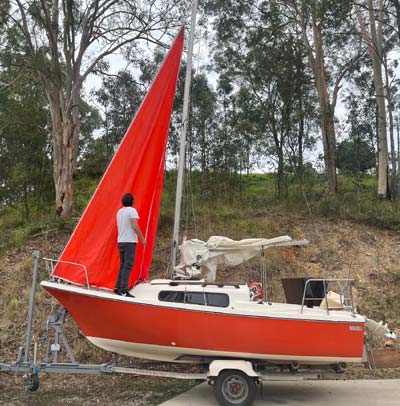
Photograph reproduced for identification and historical research purposes. Copyright remains with the original rights holder.
Quick tip: Keep in mind that trailer sailers can vary quite a bit, even within the same class. Take the RL28, for example: they might not all have outboard wells as designed. Some originally may have had inboard engines, and when those were removed, the owners swapped them for a standard outboard mounted on the stern.