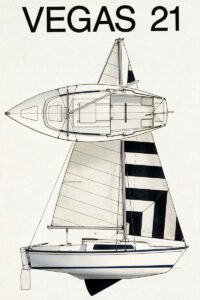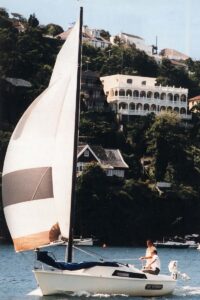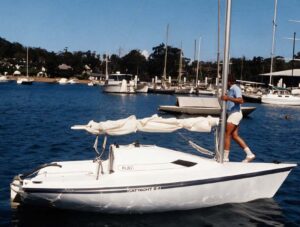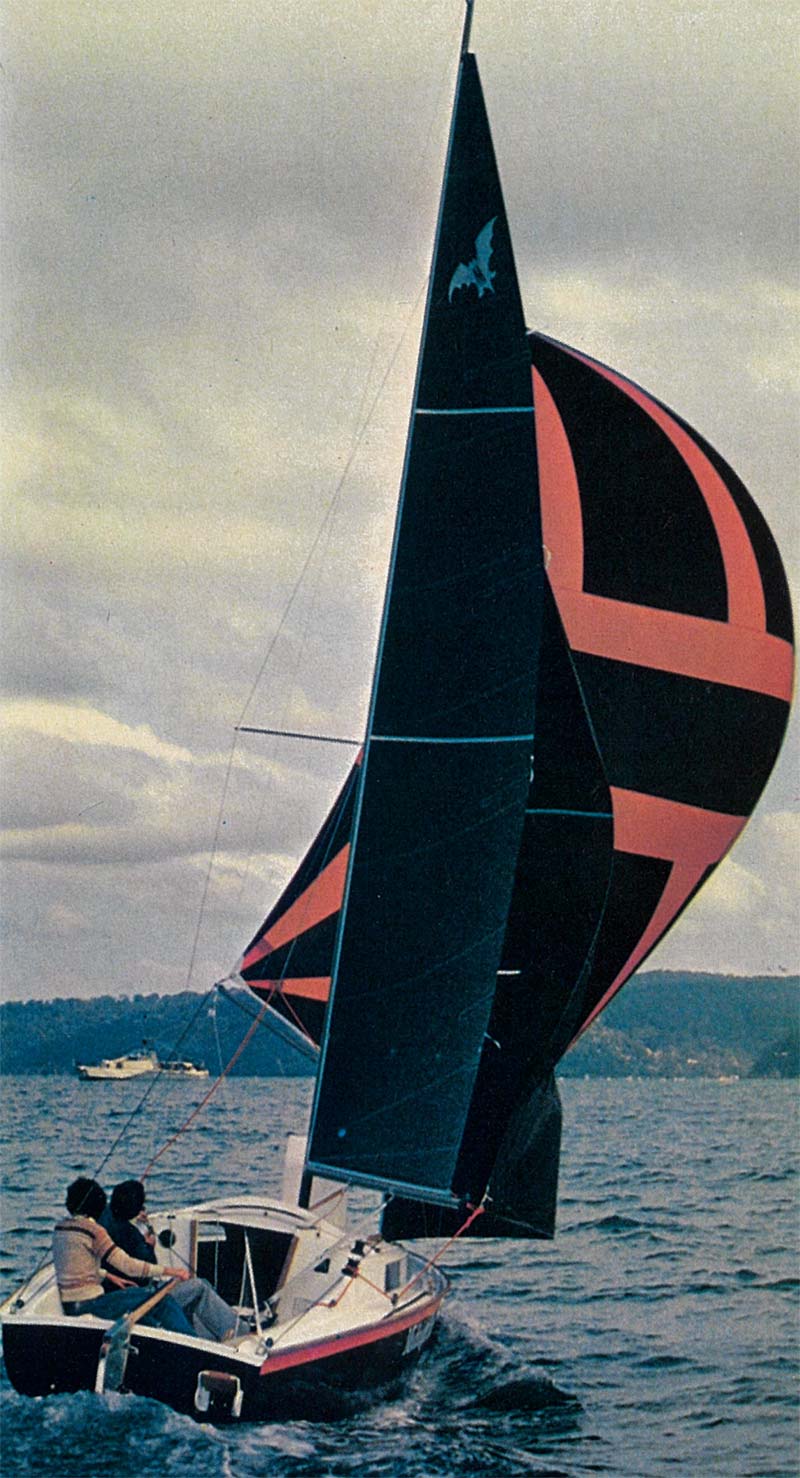
The Midnight 21 is an affordable trailable yacht designed for Junior Offshore Group (JOG) racing, offering a cost-effective versatile option for sailing, cruising, and club racing. Despite a recent surge in 20-to-21-foot trailable yachts on the market, few cater to the individual sailor looking for serious offshore potential. While trailer sailors with trailer-sailer size rigs often feature limited options in JOG racing, offshore racing enthusiasts typically prefer small keelers due to their substantial stability margins. Designed as a light displacement keeler or centreboarder, the Midnight 21 comfortably accommodates overnight racing and weekend trips up-river, featuring four berths and sitting headroom within its cabin.
Originally conceived in New Zealand by offshore sailor Rin Brettall as an attractive low-sided design with a swing keeler, Australian builder Formit Fibreglass saw immense potential in the concept. Formit partnered with Brettall to construct the vessel in Australia, modifying it into a fixed keeler configuration. The boat features a light displacement hull form characterized by a fine entry running back into a wide, shallow underbody and a broad transom counter. Formit further updated the original New Zealand design by replacing its small masthead rig with a taller, five-sixth rig to enhance performance in light winds while complementing the light displacement hull.
In the Australian version, Formit developed a high aspect ratio dagger-like swing keel constructed of welded stainless steel filled with lead, weighing 272 kg (600 lbs). The keel retracts into a specialized slot in the hull and secures with six keel bolts into heavy athwartship floor timbers, providing a strong keel-to-hull joint without compromising structural integrity. Constructed using new moulds, the hull features three main stringers with timber cores and a roll-over deck flange joint fiberglassed together internally. The deck uses plywood sheets for stiffness, and the cabin top is through-bolted to handle rough weather operations.
During sea trials off Broken Bay and Pittwater in 15 to 18-knot sea breezes, the Midnight 21 demonstrated strong overall sailing performance. The boat offers good initial stability, accelerating rapidly off the tops of lumpy waves despite its wetted surface area. Its narrow, deep keel paired with a transom-hung rudder allows for precise control and easy manoeuvring in tight quarters. The vessel is particularly well-suited for moderate to windier conditions, handling rough water impressively well without rolling or skewing.
The deck layout is organized for both efficiency and safety in offshore conditions. It features a shallow cockpit with good back support, narrow coamings, side decks wide enough for hiking, and a bridge deck separating the main hatch from the cockpit to keep water out. Non-skid surfaces, cabin-top grab rails, and an integrated anchor well add to safety and functionality. However, the low boom height required careful attention, as it sat somewhat close to the helmsman during manoeuvres. Below deck, the interior utilizes the Bluebird mould to fit four berths, a galley unit, and space for a chemical toilet beneath the forward berths. While headroom is limited due to the low freeboard, the layout is practical for short overnight trips and weekend camping (Hill 1979, p. 10).
SPECIFICATIONS:
* LOA: 6.4 m (21 ft)
* LWL: 5.7 m (18 ft 9 in)
* Beam: 2.36 m (7 ft 9 in)
* Draft: 1.52 m (5 ft)
* Displacement: 952 kg (2,100 lb)
* Ballast: 272 kg (600 lb)
* Working Sail Area: 27.3 m² (294 sq ft)
* Price (September 1978): Hull, deck, and internal furniture mould: $4,250
* Sail-away Price: $7,800 (Includes main, genoa, rig, galley unit, and bunk cushions)
Source: Hill, James (1979) ‘Sail Report – Midnight 21: Black is Beautiful!’ Seacraft, January, p. 10ff.
Historical photograph reproduced for identification and historical research purposes. Copyright remains with the original rights holder.
Quick tip: Keep in mind that trailer sailers can vary quite a bit, even within the same class. Take the RL28, for example: they might not all have outboard wells as designed. Some originally may have had inboard engines, and when those were removed, the owners swapped them for a standard outboard mounted on the stern.