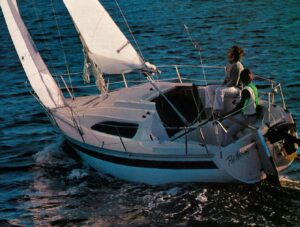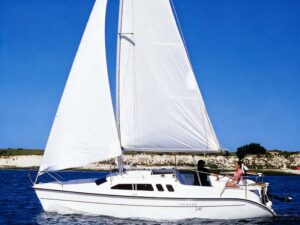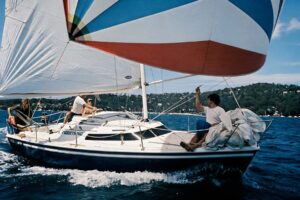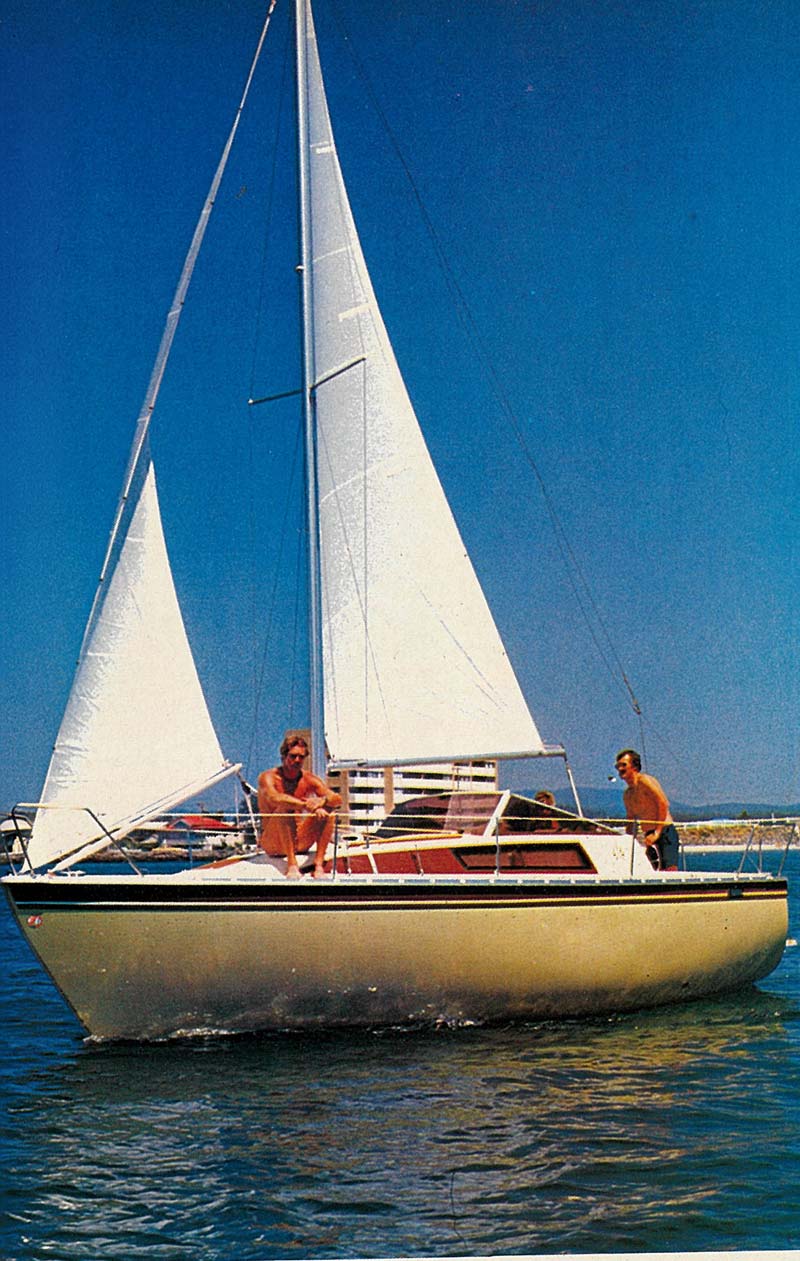
What the Japanese have done in Australia with cars could happen again in boats if the imported Yamaha range is any indication. During a test run in Queensland, the Yamaha 24 motor sailer proved to have plenty of features to like.
Few places in Australia test a shoal-draft motor sailer as thoroughly as the southern end of Moreton Bay. Navigating the broad waters around Southport requires negotiating numerous shoals and narrow, deep-water channels before crossing the quickly silting Jumpinpin area. The Yamaha 24 is ideally suited for this region. With a draft of only 0.9 meters, it can freely navigate shallow areas that force larger vessels to stay in deeper water.
Under power, driven by a strong northerly breeze of over 20 knots, the vessel achieved a respectable 4.5 knots against both wind and tide. Its 8 hp Yanmar diesel engine is positioned beneath the cockpit sole, completely isolated from the interior living quarters. Excellent sound insulation minimizes engine noise and vibration throughout the vessel. Attention to detail is evident everywhere; for instance, the engine compartment features a built-in blower fan to exhaust fumes before startup.
The helm takes some initial adjustment. Wheel steering on a boat of this size frees up significant space in the cockpit, and while the polished stainless steel rim can feel somewhat smooth, the steering responds with good sensitivity and feedback. The manufacturer also designed the setup to allow a tiller to be fitted if preferred.
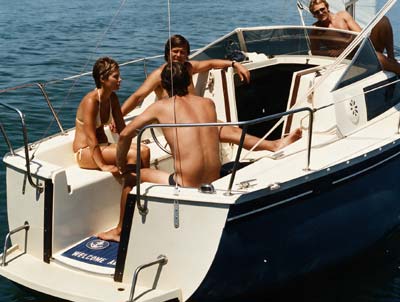
The cockpit drainage system routes through two outlets into the steering gear well. Under rough conditions, these outlets can be capped to prevent sea water from backing up, though any water that enters the cockpit drains quickly. Removing part of the transom provides direct access to a duckboard, making it easy to step straight into a tender or use the stern for diving and swimming.
A windscreen located forward of the main companionway hatch proved surprisingly effective at keeping spray off the crew as the boat pushed through choppy water. For added comfort, a dodger can be buttoned onto the top of the screen and folded back when needed.
Deck hardware, including the rails, pushpit, and pulpit, is sturdy and securely mounted. The deck itself is spacious, uncluttered, and easy to move around. The companionway hatch mechanism utilizes simple spring struts to hold it open reliably without simple drop props. However, the turn-screws on the hatch showed a tendency to vibrate loose under way.
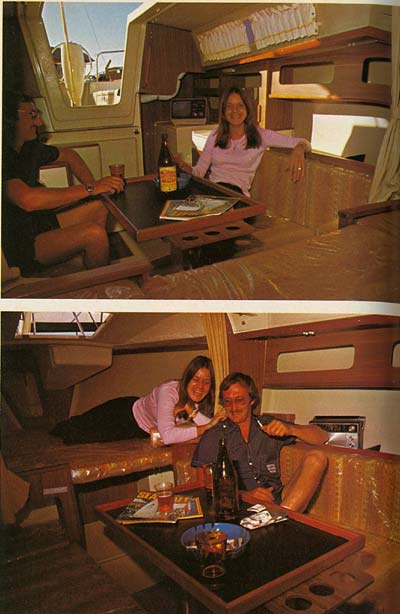
Interior ventilation is exceptionally well thought out. Air enters through the cabin trunking via a dorade box, allowing the boat to stay ventilated in almost any weather condition. Below deck, two steps lead to an innovative galley layout angled to port. The galley offers generous headroom under the open hatch, as well as an icebox, stove, and ample cupboard storage. In foul weather, the dodger provides additional shelter over the open hatch. A drop-side table swivels to serve as seating on either side of the companionway. While the berths appear slightly short at first glance, removing the end cushions opens up foot space under the double V-berth. A marine head remains completely hidden out of sight until needed.
The overall interior finish is high quality, featuring soft nylon shrouding over cleats and chainplates to prevent snags on clothing. The boat comfortably sleeps six with genuine accommodation space and full headroom, making it one of the best-finished vessels in its class.
Handling tests near Tipplers Passage highlighted how well the Yamaha performs under sail and power. Despite its high sides catching the wind during close docking manoeuvres, its self-tacking jib setup, rerouted via fairleads on either side of the foredeck to jam cleats on the gunwales, allows easy single-handed or shorthanded sailing.
The self-draining anchor locker is spacious enough to hold a large CQR anchor and line, though the anchor must be guided over the bow rollers manually. All halyards and sheets lead directly into the cockpit for ease of operation. While two Barlow 16 winches are sufficient for cruising, a boom vang was noticeably absent from the rigging. Quality fittings, such as bronze slides on the jib, are present throughout.
Despite initial scepticism regarding its performance under light sail and power, the boat performed very well under both. In light winds, its modest 16.42 m² sail area makes it feel under-canvassed, functioning primarily as a motor sailer. However, once the wind increases, its performance jumps dramatically. Even in gusts up to 15 knots, the boat remains exceptionally stiff and stable, carrying full sail long after rival vessels are forced to reef. Tacking is effortless, allowing the vessel to be thrown through the wind without requiring the crew to work the tiller or adjust sheets (Coates 1978, pp. 42-45).
SUMMARY:
* Ideal as a family boat and motor sailer for quiet, smooth diesel cruising or recreational sailing.
* Performs well under power alone in light air, achieving speeds over 10 knots under suitable conditions.
* Highly creditable performer as a pure yacht with a smooth motor, self-tacking jib, and shallow draft.
* Highly recommended for shoal areas and difficult-to-navigate spots.
* Beautifully finished and one of the most comfortable boats in its class.
LIKES:
* Excellent finish
* Versatility
* Ability to cover distance quickly with sail/power combination
DISLIKES:
* Needs a bow roller and a boom vang
* Tricky sail arrangement
Specifications
-
Model: Yamaha 24 motor sailer
-
Test Boat Provided By: Ray Leigh Smith of Surfers Paradise Marine, Qld
-
LOA (Length Overall): 7.42m
-
LWL (Length Waterline): 6.50m
-
Beam: 2.59
-
Displacement: 1,650kg
-
Draft: 0.90m
-
Ballast: 650kg
-
Sail Area: 16.42m2
-
Auxiliary Power: 8 hp Yanmar diesel
-
Price (as tested, 1977): $23,000
Source: Coates, Dick (1978) ‘The Japanese Fun Machine’ Seacraft, May, pp. 42-45.
Historical photograph reproduced for identification and historical research purposes. Copyright remains with the original rights holder.
Quick tip: Keep in mind that trailer sailers can vary quite a bit, even within the same class. Take the RL28, for example: they might not all have outboard wells as designed. Some originally may have had inboard engines, and when those were removed, the owners swapped them for a standard outboard mounted on the stern.