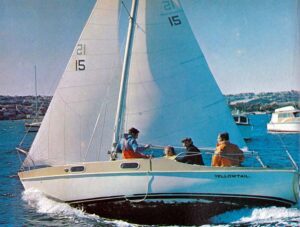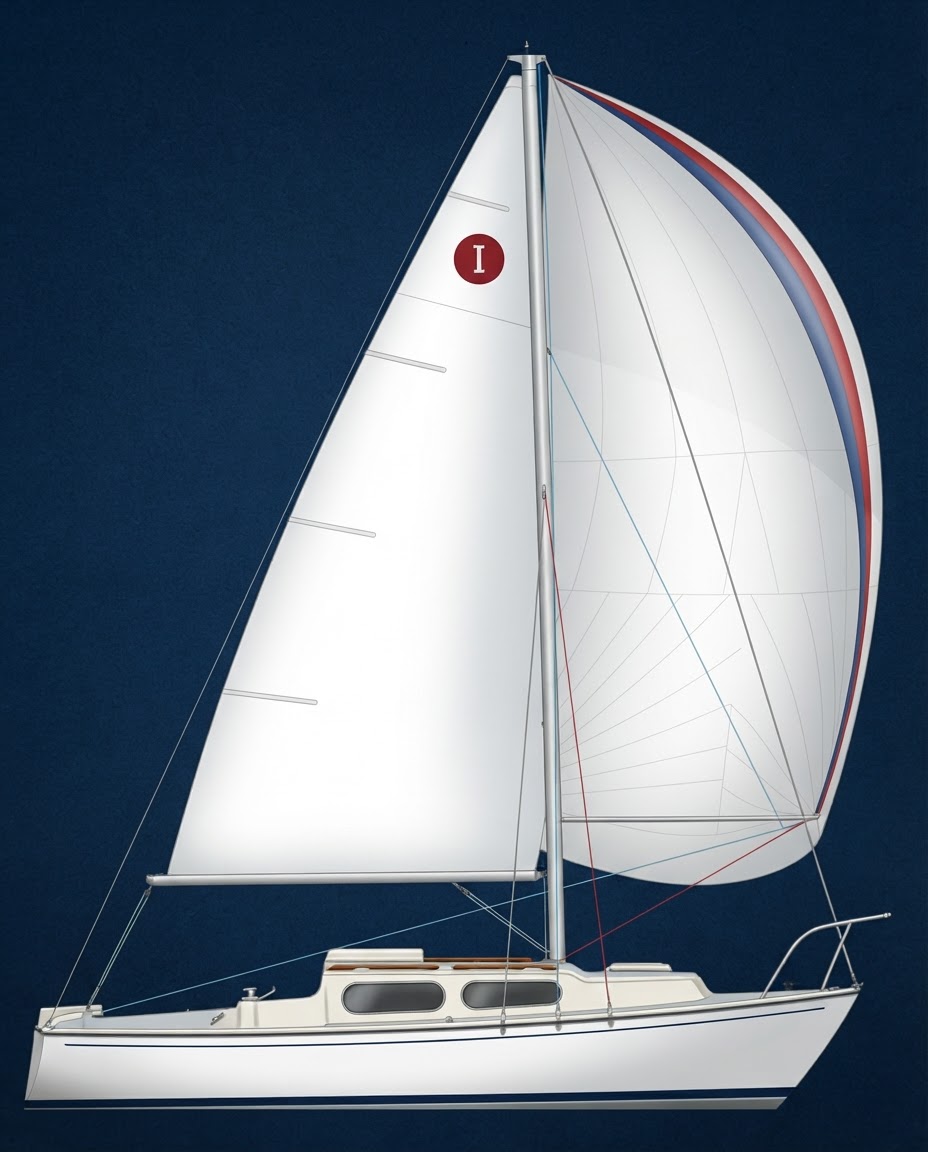
The Islander 23 is a 23-foot fiberglass twin-bilge-keel boat engineered for family racing and cruising. Its defining feature is its twin hydrofoil keels, which enable the vessel to stand upright on beach sand or mudflats during low tide. Drawing just 2 feet 9 inches, it can easily navigate shallow waters, dock without a dinghy, and be painted or serviced between tides to avoid costly slipping fees.
On the water, the Islander 23 excels in light-to-medium conditions, offering smooth and effortless handling. In heavier winds ranging from 18 to 20 knots, the boat experiences strong weather helm if allowed to heel excessively, but actively managing the mainsheet keeps her sailing upright and performing smoothly. She tacks and jibes easily, and safety is well assured by a self-draining cockpit, a high bridge deck to keep water out of the cabin, and a self-righting hull design.
Designed with family trips in mind, the cabin offers surprisingly generous living space for its size, complete with near-standing headroom, four full-sized bunks, a galley, a stove, a large icebox, and a private enclosed toilet. The spacious cockpit comfortably seats up to five adults. Powering the vessel is a stern-mounted outboard engine fitted with an auto- hoist system, which pushes the hull at its cruising speed of around 4 knots against headwinds. Overall, the Islander 23 offers an ideal blend of simple single-handed operation for the skipper and comfortable weekend living for the entire family.
Specifications:
(23-foot fibreglass racing/cruising sloop with twin bilge keels)
LOA: 22 ft 5 in.
LWL: 20 ft.
BEAM: 7 ft 6 in.
DRAFT: 2 ft 9 in.
DISPLACEMENT: 2688 lb.
BALLAST: 1120 lb.
SAIL AREA: 245 sq ft — main 125, working jib 85, genoa 120, storm jib 34, light weather genoa 160, spinnaker 270 sq ft.
Source: ‘Seacraft Sails Two Family Cruising Racing Sloops: Islander 23 – Two Keels for Beaches’ Seacraft, March 1968, pp. 18-21.

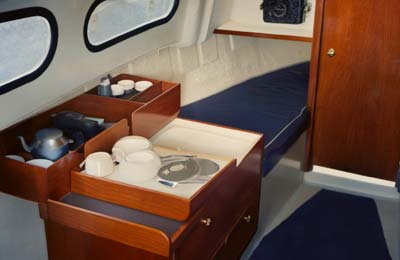
Historical photograph reproduced for identification and historical research purposes. Copyright remains with the original rights holder.
Quick tip: Keep in mind that trailer sailers can vary quite a bit, even within the same class. Take the RL28, for example: they might not all have outboard wells as designed. Some originally may have had inboard engines, and when those were removed, the owners swapped them for a standard outboard mounted on the stern.